
Do I Need an HMO Licence in Greater Manchester? 2026 Guide



If you own — or are considering buying — an HMO in Greater Manchester, licensing is one of the most important areas to get right.
Getting it wrong can lead to serious consequences, including:
Fines of up to £40,000 per offence
Rent Repayment Orders of up to 12 months’ rent
Difficulties selling or refinancing your property
The key point is this:
The rules are not the same across Manchester and Salford.
The Three Types of HMO Licensing:
There are three separate licensing schemes that may apply depending on the property and location.
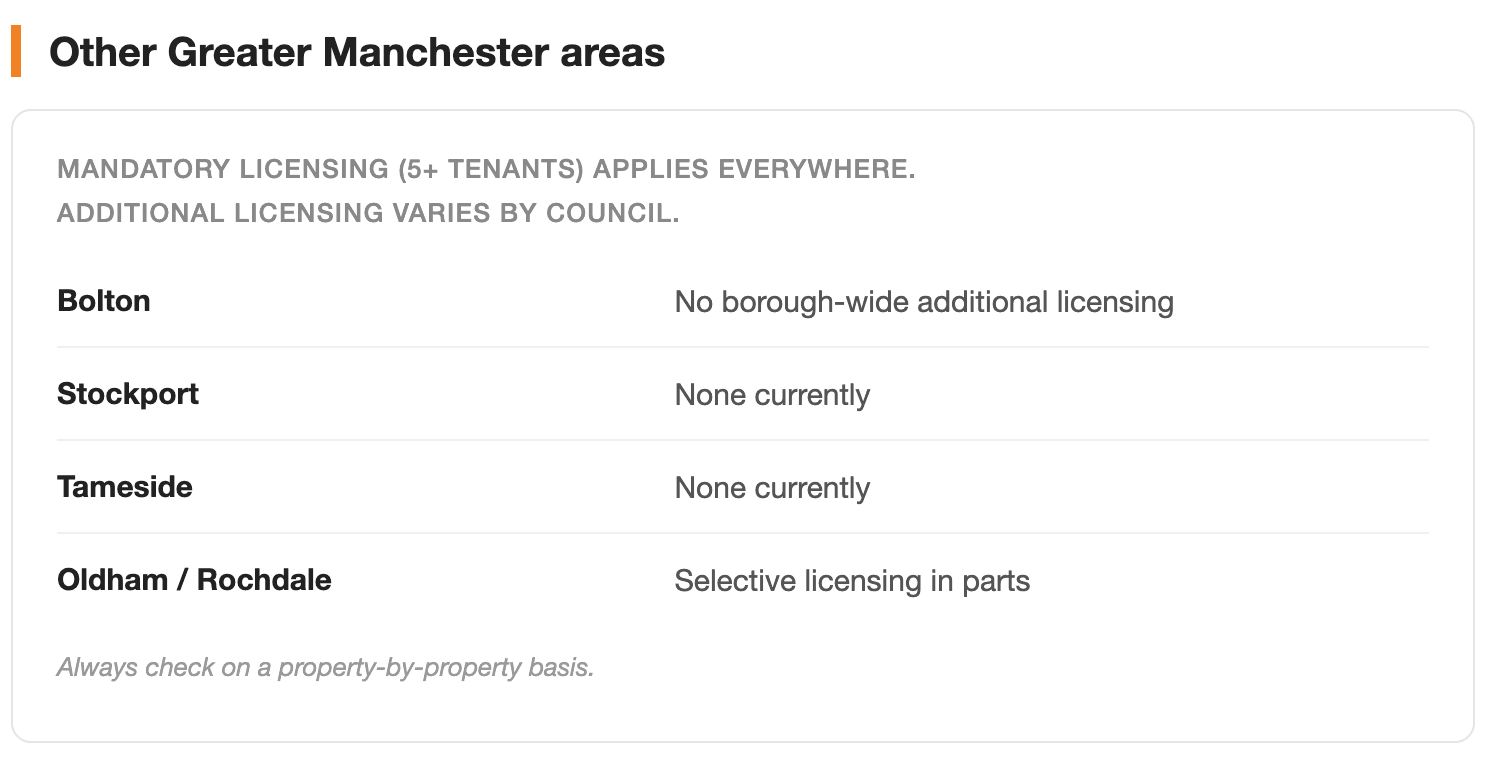
Mandatory HMO Licensing
You must have a licence if your property has:
Five or more tenants
Two or more households
Shared facilities
This applies across all of England.
There are limited exemptions in specific circumstances, such as certain Registered Providers.
Additional Licensing
Additional licensing allows local councils to extend licensing requirements to smaller HMOs.
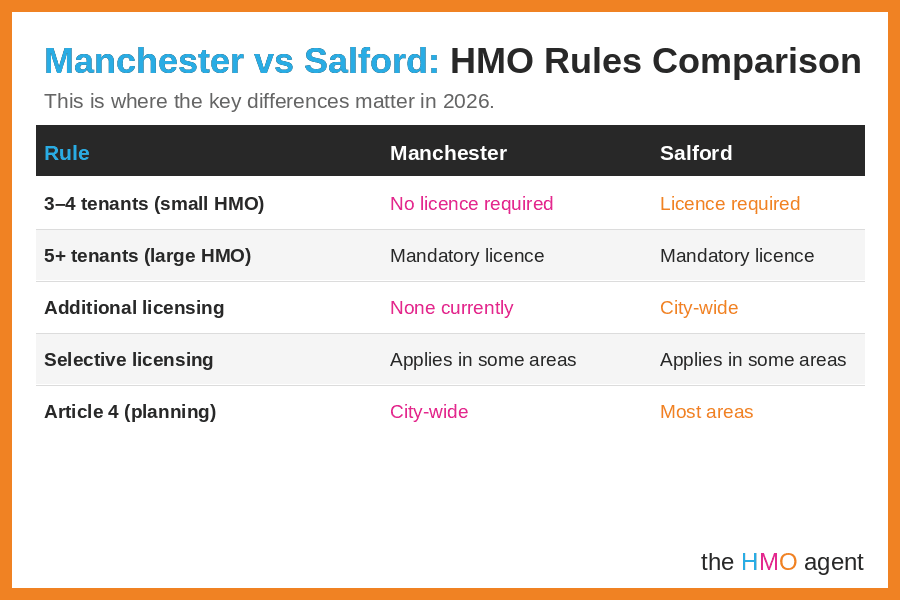
This is where Salford differs significantly from Manchester.
In Salford:
HMOs with three or four tenants require a licence
This applies across the whole city
In Manchester:
HMOs with three or four tenants do not currently require an HMO licence, unless selective licensing applies
This is one of the most common areas where landlords make mistakes.
A property that does not require a licence in Manchester may require full licensing in Salford.
Selective Licensing
Selective licensing applies to all private rented properties within designated areas, not just HMOs.
In Manchester, schemes operate in areas such as:
Harpurhey
Gorton
Cheetham
Miles Platting
In Salford, selective licensing applies in specific wards, in addition to HMO licensing.
Always check each property individually.
What Does an HMO Licence Require?
A licence involves more than submitting an application. Councils assess whether the property meets required standards.
Fire Safety
Fire doors, smoke detection systems and suitable escape routes must be in place.
Room Sizes
Minimum legal room sizes apply for sleeping accommodation.
Facilities
Adequate kitchen and bathroom provision must be provided for the number of occupants.
Management Standards
The property must be properly managed by a suitable person.
Safety Certification
Typical requirements include:
Fire Risk Assessment (with interlinked alarms)
Electrical Installation Condition Report (EICR), typically every five years
Gas safety certificate, renewed annually
Energy Performance Certificate (EPC), typically valid for ten years
PAT testing where applicable
Why Licensing Matters More Than Ever
Licensing now plays a central role in:
Property value
Mortgageability
Buyer confidence
It also increasingly influences whether landlords choose to retain, lease or sell their properties.
A fully compliant HMO is more attractive to buyers, lenders and operators.
Not Sure What Applies to Your Property?
Every HMO is different, and the correct approach depends on your property, location and objectives.
We can provide a clear review of:
Licensing requirements
Planning position
Market value
Lease income potential
Book your free HMO compliance and valuation review here : 20 minute initial call